Small Unmanned Aircraft Systems (UAS) / Drone Inspections
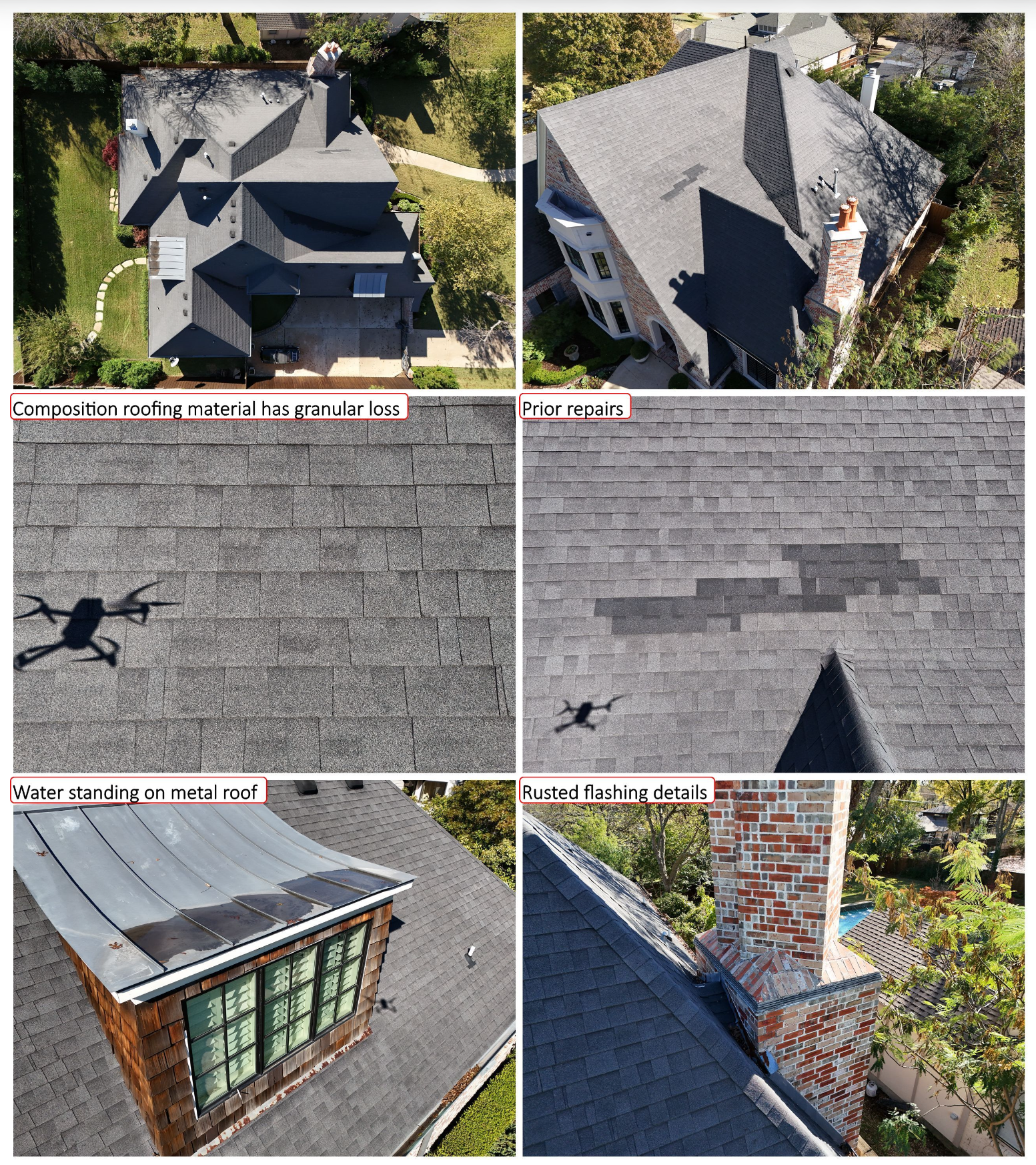
Over the years, the home inspection process has evolved through the use of advanced tools such as foundation elevation measurements, thermal imaging, and drone technology. These tools enhance the inspection by improving access, documentation, and overall safety.
Small Unmanned Aircraft Systems (UAS), commonly referred to as drones, allow inspection of areas that may be inaccessible or unsafe to reach on foot. This includes steeply pitched roofs, multi-story roof surfaces not visible from the ground, and elevated exterior components. Drone inspections can also improve vantage points for viewing upper wall areas, windows, exterior veneers, roof transitions, and other elevated features.
Roof systems often include sidewalls, valleys, and transition points where flashing details are critical. These areas can be common sources of water intrusion when not properly installed. While walking the roof—when safely accessible—remains the preferred inspection method, changing the vantage point with drone technology can reveal conditions that may not be visible from the roof surface or the ground.
Drone inspections require more than simply operating a drone. All drone operations performed by Platinum Home Inspections are conducted by an inspector who holds a Federal Aviation Administration (FAA) Remote Pilot Certificate (Part 107) and are carried out in accordance with applicable FAA regulations. These regulations govern non-recreational drone use and establish required operating procedures and safety standards.
The availability of drone inspections varies by property and is dependent on airspace restrictions, weather conditions, and site-specific safety considerations.
When conditions allow, drones equipped with high-resolution still cameras and 4K video provide an effective and safe method for documenting roof and exterior conditions as part of a comprehensive visual inspection.